DSD already had a manually operated AI content strategy process for clinics. I designed this AI-assisted workflow to systemize that process, helping dental practices capture recurring patient concerns, approve clinical guidance once, and safely reuse that knowledge across patient education.
Role
Industry
Duration
Company

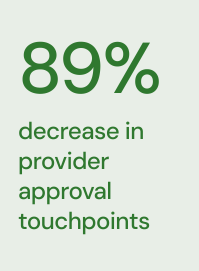
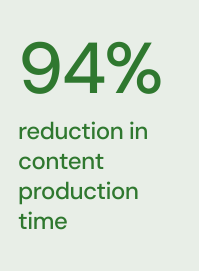

Every patient conversation ended with lost knowledge.
Dental practices were recording hundreds of appointments with AI transcription. But once a visit ended, the provider's explanations disappeared with it. Patients continued searching online for answers. Providers repeated the same explanations every day. I saw an opportunity to turn individual conversations into a reusable clinical knowledge system.
Every patient conversation ended with lost knowledge.
Dental practices were recording hundreds of appointments with AI transcription. But once a visit ended, the provider's explanations disappeared with it. Patients continued searching online for answers. Providers repeated the same explanations every day. I saw an opportunity to turn individual conversations into a reusable clinical knowledge system.
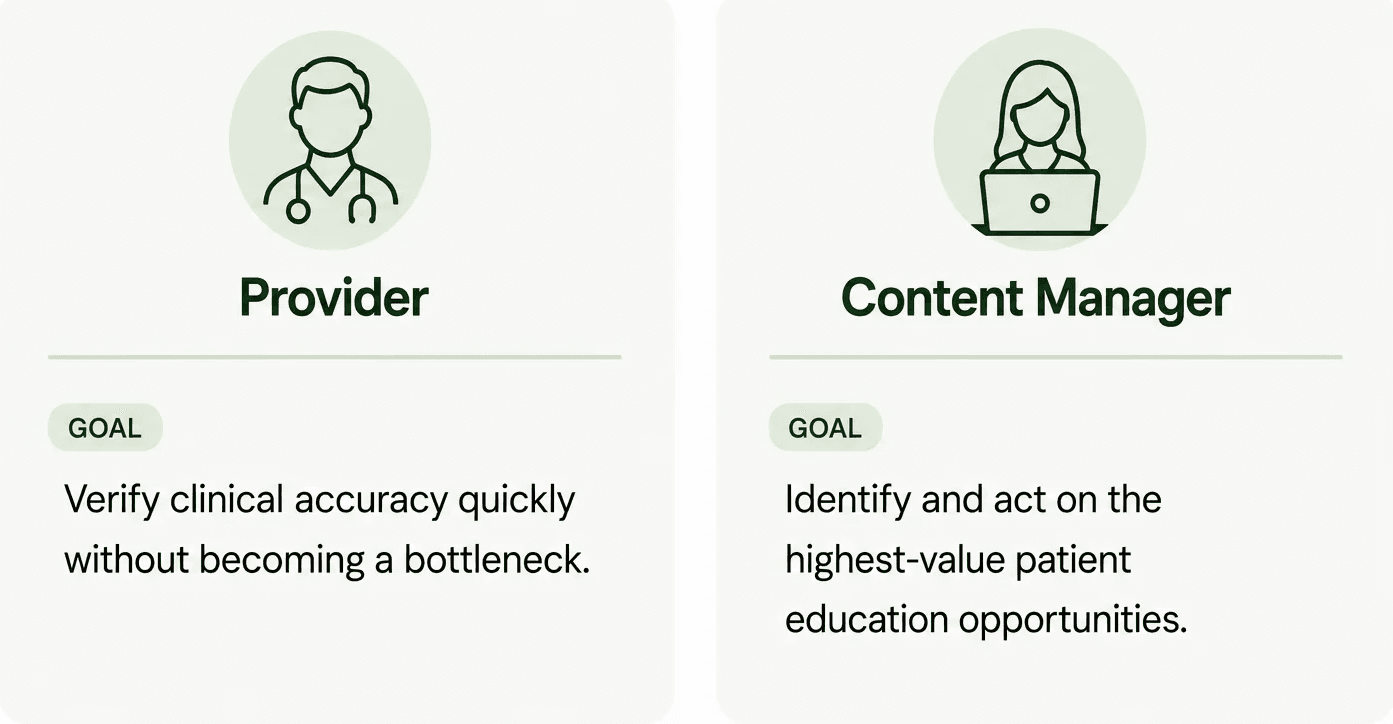
Designing for two different users.
Providers needed to verify clinical accuracy quickly without reviewing every downstream content asset, and content managers needed to identify and act on the highest-value patient education opportunities.
AI accelerates work. Humans remain accountable.
The redesigned workflow captures recurring patient questions and identifies meaningful education opportunities. Providers verify medical guidance once, allowing content managers to safely reuse that knowledge across patient education.
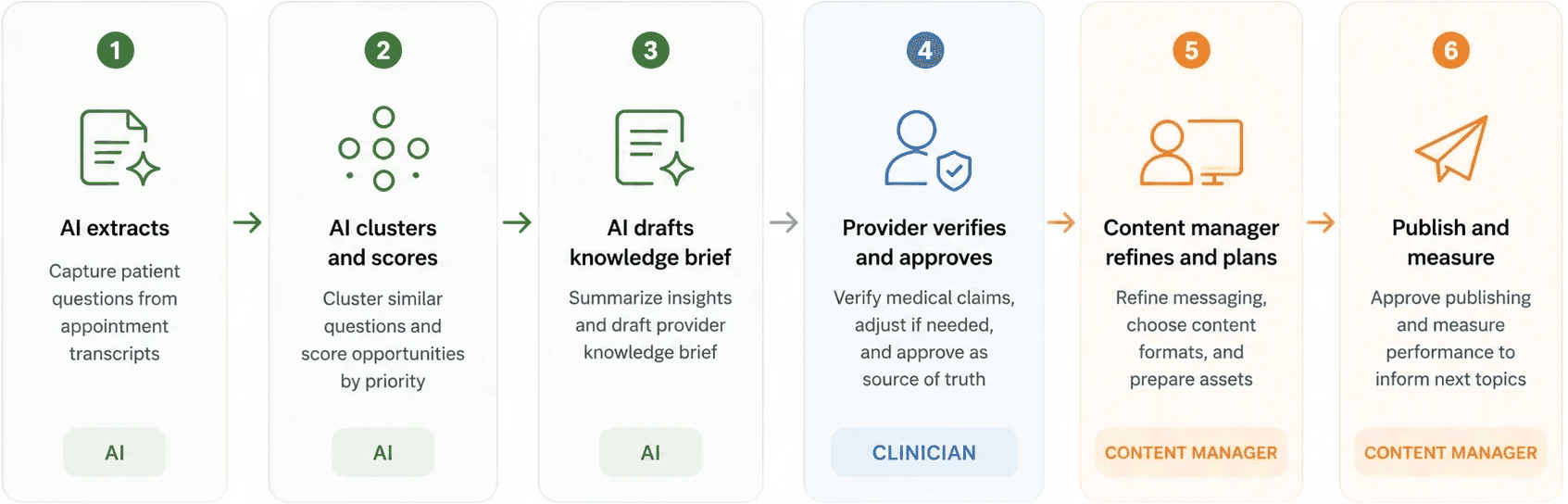
Turn Individual Conversations Into Shared Knowledge Opportunities.
Every transcript could have become a separate content task, which would have overwhelmed the content manager. I designed the system to cluster questions by shared patient intent first. This allowed the content manager to respond to one meaningful topic, such as implant pain, rather than dozens of nearly identical conversations.

Prioritize opportunities based on patient need and business value.
Not every patient question deserved the same attention. I designed an Opportunity Score that made the prioritization logic visible. Providers and content managers understand why one topic should be addressed before another.

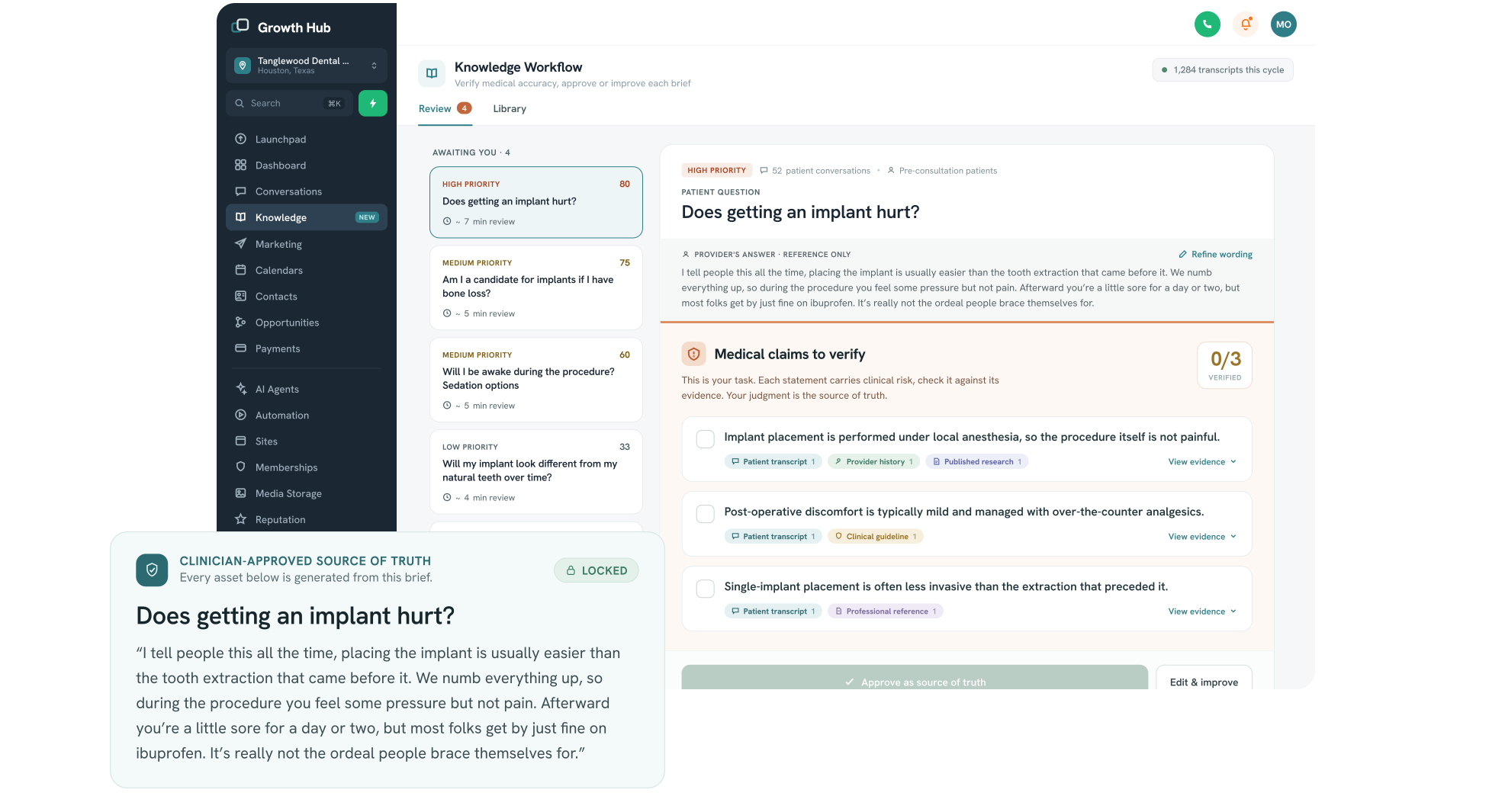
Review Knowledge Once, Not Every Asset.
Busy providers shouldn't review every blog, FAQ, or social post. Instead, they approve one Provider Knowledge Brief that becomes the source of truth for every future asset.
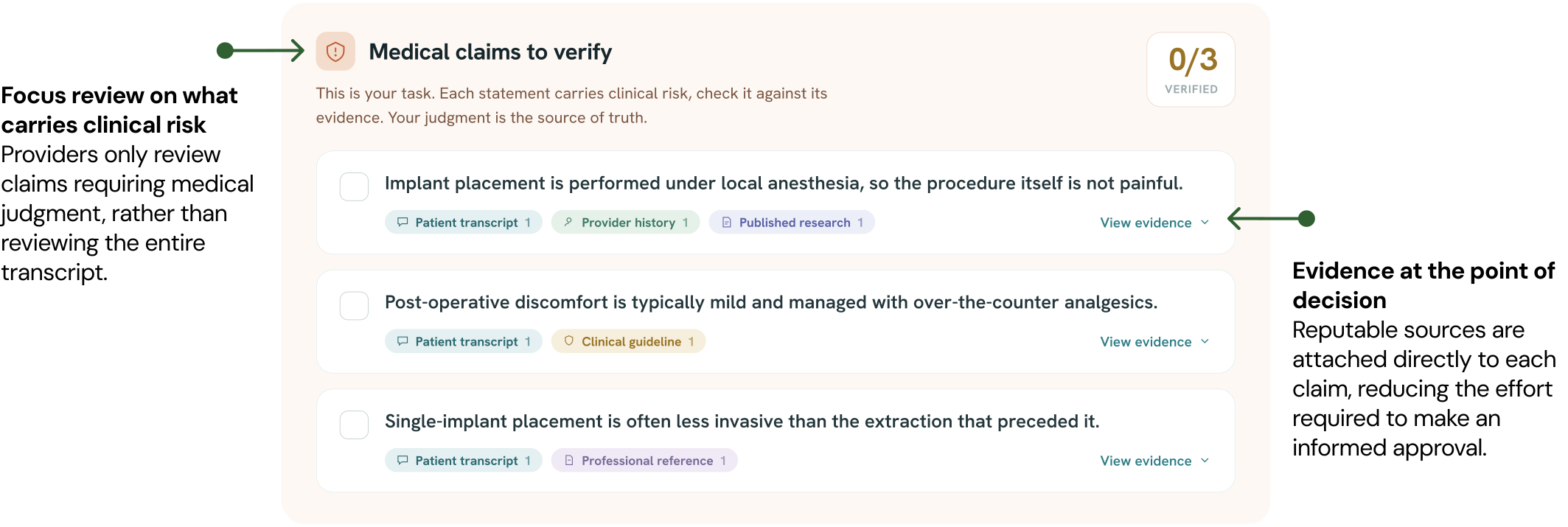
Once the provider approves the Knowledge Brief, it becomes the content manager’s clinical source of truth.
The next challenge was scaling approved knowledge into content without losing the clinical integrity established.

Preserve Trust Throughout the Content Lifecycle.
AI can generate content quickly, but scaling content shouldn't sacrifice accountability. I designed the workflow so every asset the content manager generates stays connected to approved clinical knowledge from creation through publishing.
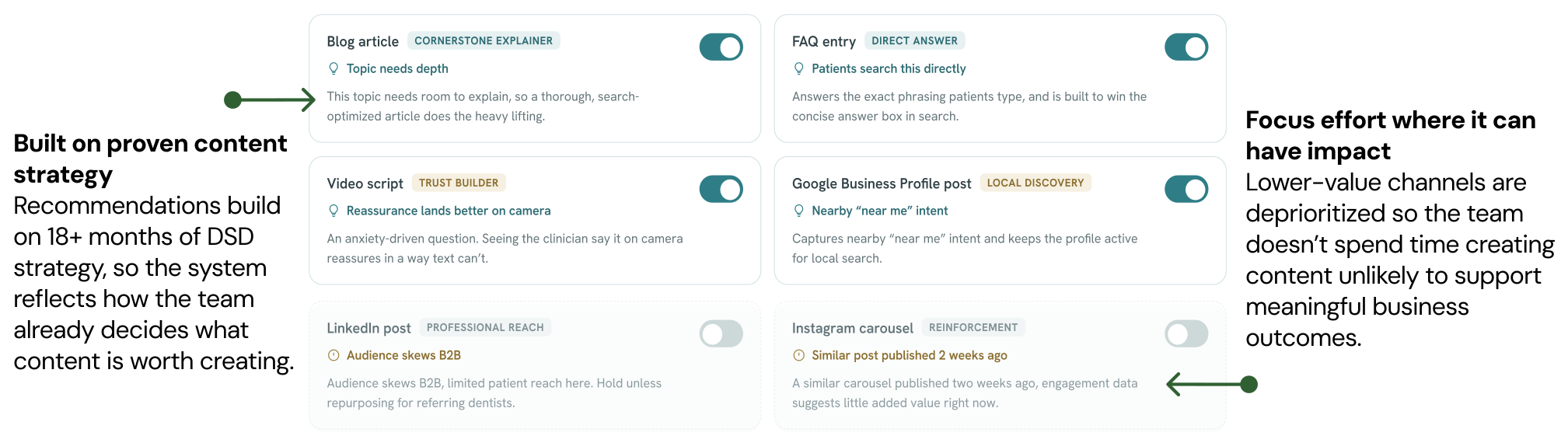
Recommend the Right Content at the Right Time.
The system recommends the most appropriate content plan for the topic “Does getting an implant hurt?” while intentionally deprioritizing lower-value channels.
Recommendation layer builds on content strategy prompts DSD has refined for more than 18 months.
Every Asset Stays Connected to Clinical Knowledge
The content manager edits branding and tone all in one place before sending assets to the publishing queue. This keeps AI-assisted publishing efficient while maintaining clinical governance and traceability.

A workflow that learns over time.
I prototyped a future state where content performance became another prioritization signal. If implant pain content performed well, the system could recommend a related topic such as recovery and aftercare.



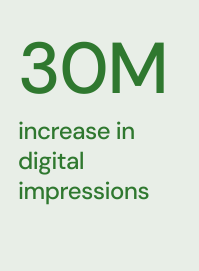
The clinic didn't create another blog. It strengthened its knowledge base.
Other projects

Designing Preventative Cardiometabolic Care
Designed the end-to-end product experience for a new cardiometabolic monitoring system, including the patient-facing breathing protocol, results experience, clinic dashboard, and EHR workflow.
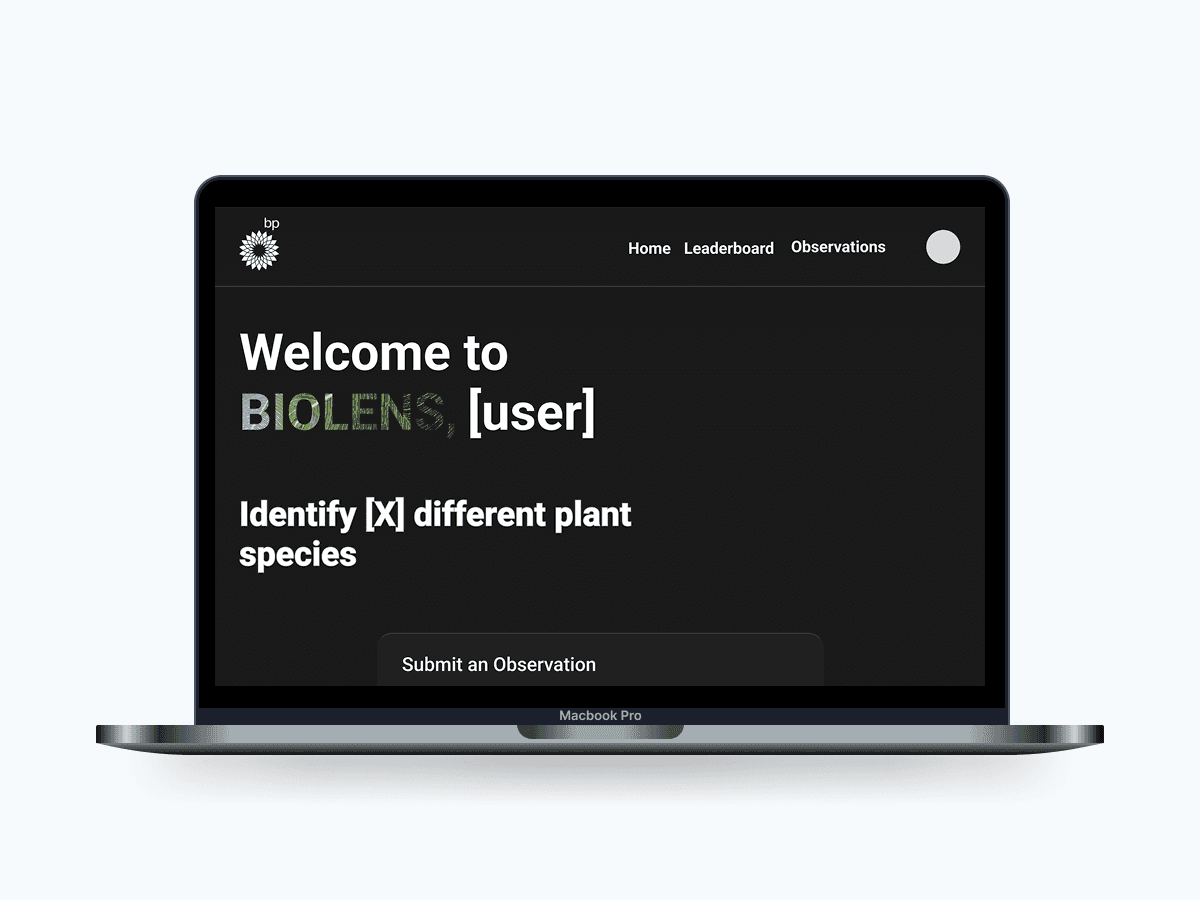
Reimagining How Employees Connect with Nature
Designed an intranet, BioLens, which featured species identification, gamified rankings, and educational quizzes to help bp employees connect with biodiversity.
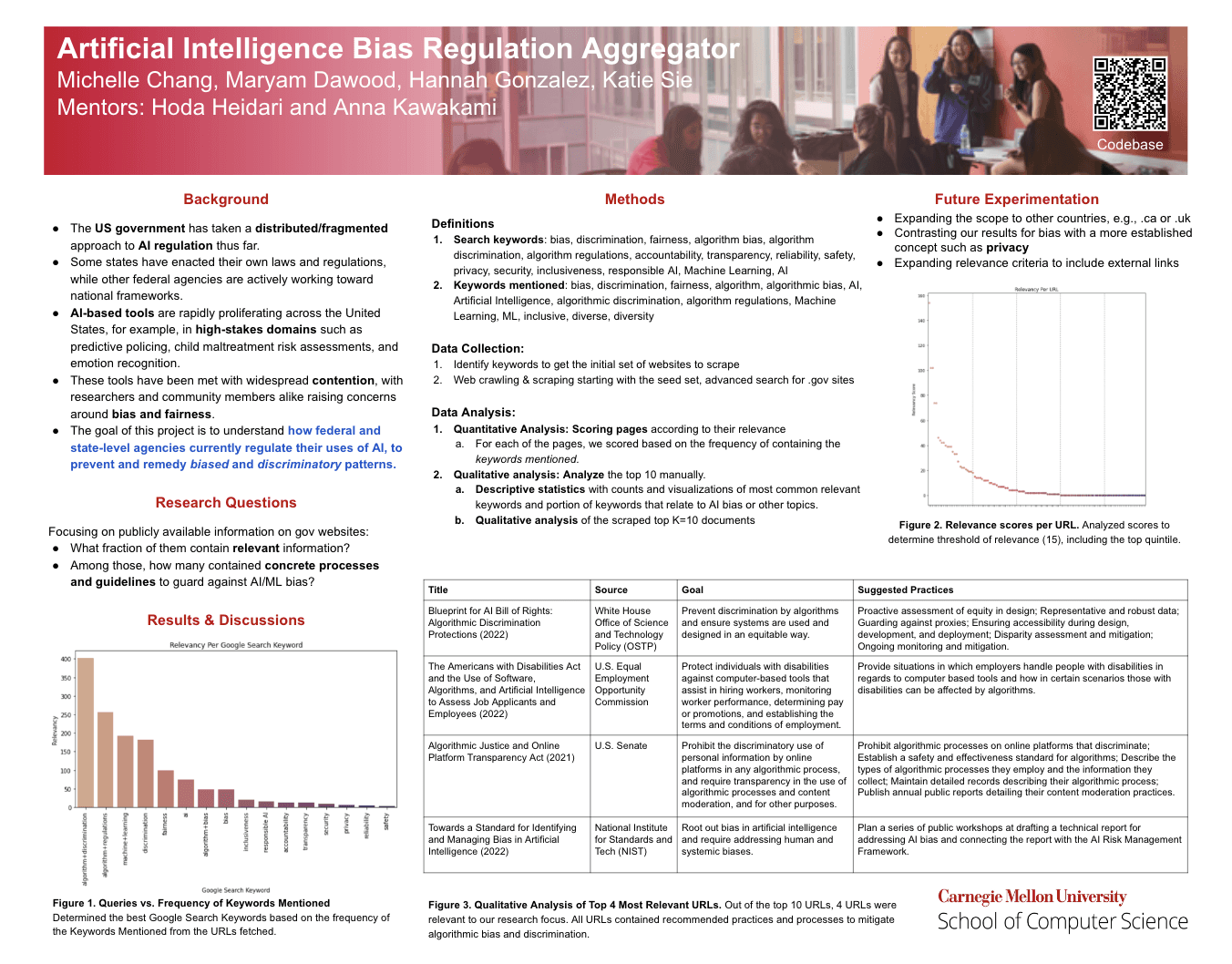
Research at Carnegie Mellon University on AI/Machine Learning
OurCS